
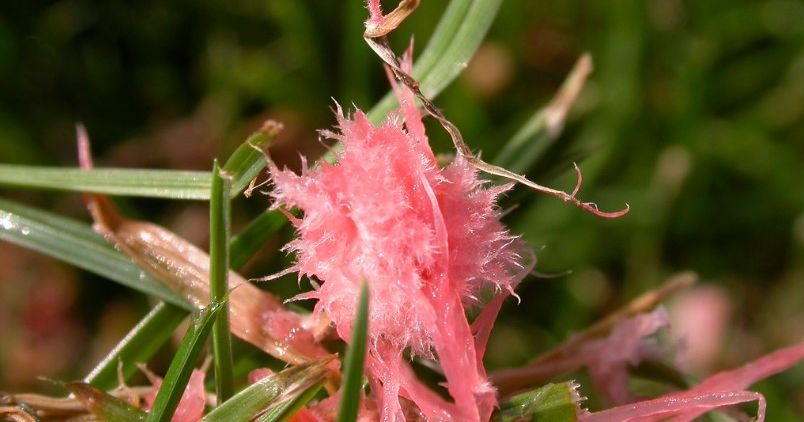
If you’ve noticed small pinkish or reddish spots in your lawn lately, you’re not alone. We’re seeing quite a bit of this around Hamilton County right now, especially in Carmel, Westfield, Noblesville, and nearby areas.
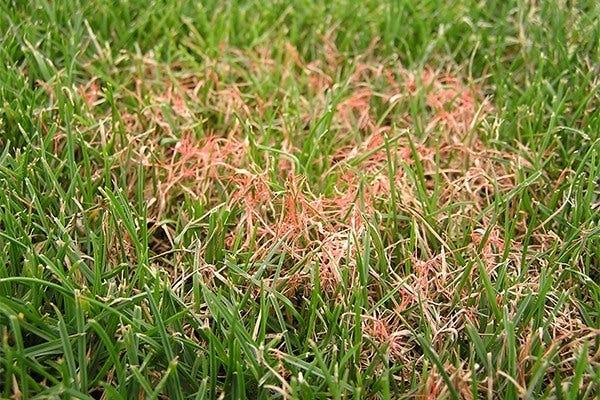
A lot of these spots are showing up as small circular patches, sometimes about the size of a golf ball, with a pink tint. In many cases, this can be a sign of red thread or pink patch, which are common lawn fungus issues in Central Indiana.
They can look a little scary when they first show up, but the good news is this type of lawn fungus is treatable and can improve over time with the right care and prevention.
Why It Shows Up
Red thread and pink patch tend to show up when the weather gives fungus exactly what it likes, moisture, humidity, cloudy days, heavy dew, and stressed turf.
This does not always mean your lawn is dying. A lot of the time, this fungus is affecting the grass blades more than the root system. That means the lawn has a good chance to recover, especially when growing conditions improve and the lawn is cared for properly.
We often see more fungus activity when lawns are staying wet too long, getting watered too often, or dealing with stress from weather, mowing, soil conditions, or thin turf.
What You Might Notice
Homeowners may see:
Small circular spots
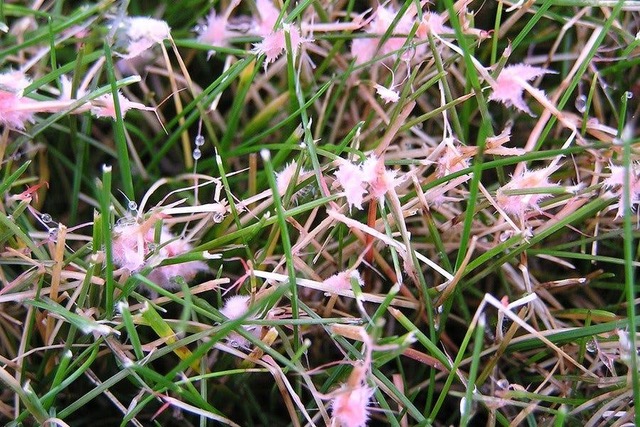
Pink or reddish tint in the lawn
Tan or gray patches mixed with pink coloring
Thin-looking areas
Grass blades that look like they have fine pink or red threads on them
Spots that seem to show up quickly after wet or humid weather
Because several lawn diseases can look similar, it’s always best not to guess too quickly. Red thread, pink patch, dollar spot, and other turf diseases can overlap in appearance. That’s one reason we like to look at the whole lawn, the weather, watering habits, mowing height, and overall turf health before making a recommendation.
What You Can Do
The biggest thing homeowners can do is avoid keeping the lawn wet longer than necessary.
Here are a few simple tips:
Water early in the morning.
Morning watering gives the lawn time to dry out during the day.
Avoid watering in the evening.
Water sitting on the grass overnight can make fungus worse.
Do not overwater.
More water is not always better. If the lawn is already wet from rain or dew, extra watering may add to the problem.
Mow at the proper height.
Cutting the lawn too short adds stress and can make disease activity more noticeable.
Keep the lawn healthy and thick.
A thicker, healthier lawn is better able to recover and handle stress.
Is It Treatable?
Yes, it is treatable. In many cases, the lawn can improve as conditions dry out and the turf grows. Good cultural practices, proper watering, mowing, and a balanced lawn care program all help.
A fungicide treatment may be helpful, especially if the disease is active or spreading. Fungicides can help suppress disease, but they work best when combined with good lawn care habits. If the lawn continues to be overwatered or stressed, fungus can keep coming back.
Prevention is a big part of managing lawn disease. We can’t control the weather, but we can help reduce the stress on the lawn and make it less inviting for fungus.
Local Help for Hamilton County Lawns
At GreenLawn by Design, we’ve been caring for lawns in Hamilton County for 21 years. We’re local, family-owned, and veteran-owned, and we know how quickly Central Indiana weather can change from dry to wet, cool to humid, and everything in between.
If you’re seeing pink spots, circular patches, or something that just doesn’t look right in your lawn, give us a call. We can help you figure out what may be going on and what steps make the most sense.
You’re not a number here — just real people, real service.
GreenLawn by Design
📞 317-804-8088
🌐 greenlawndesign.com